Easy to blame
Easy to feel blamed
Easy to find fault
To find things wanting
Tough to celebrate
To enjoy the small things
When we do we wait
We wait for the moment to pass
To be anxious is natural and the base state
Celebrations must only be short!
Can't be long and continuing,
That is reserved for pain!
How can it be possible?
But how?
For one to celebrate the touch of the sun?
Or the morsel we chew and eat when hungry.
The blessing of people who care and the unconscious smile of a child...
How can I celebrate each moment,
Surely this is not meant to last!
How can I say, "no complaints,
None whatsoever..."
Feels bit like death!
May 26, 2009


A Plaintive cry... What should I do, What should I be?
These are timeless questions. And I heard them again the other day. Not from a young student, 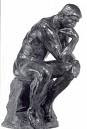 directly. But from one old enough to be his great grandmother.
Patti (Grandmother): "What should he do? What line of engineering should he choose? He is a good boy and has finished school. He will surely get good marks. But he is confused, Which line should he choose? Shall I send him to you? WIll you please speak to him?"
Teacher: "Yes, what shall we say that is something tinged with more than just hope and 'trust me I know'?"
P: "He wants to do well."
T: "I understand that and who would not. But what does 'doing well' that mean to him?"
P: "A god job and a good salary. If the IT boom had not ended he would have gone that way. But now he is unsure."
T: "Yes, what would he like to do? What would he be happy doing?"
P: "Well, that is his confusion. He does not seem to have much that he is sure of."
T: "If I see read the aspirations of most educated young people who I meet, a good job seems to mean sitting in an air conditioned office before a computer, and enough money."
P: "While that seems stark you may have a point. The man who comes to fix my air conditioner is not an engineer, but a tenth passed worker."
T: "Students who do engineering want to go up quickly - up the ladder, into management, or marketing or finance or IT."
P: "Therefore does it matter what branch of engineering, particularly if one is not going to pursue engineering?
T: "Patti, you are not supposed to be saying this - that is my line! In the college atmosphere, with peers bringing new information, this is where students gather aspirations."
P: "It used to be simple some years ago - people could choose an engineering or medical course and then life took care of them"
T: "Unfortunately, or fortunately the rules have changed in the 21C. Recently someone said to me that your degree will take you only 2 years in your career."
P: "At least that!"
T: "But what if you are only clear about 'sitting in an air conditioned office before a computer, and enough money'? The 2 years will not take you far. After that people seem to need an attitude of learning and willingness to learn again. They need stamina and forbearance to try many solutions and work with different sensibilities."
P: "Schools and colleges don't seem to be helping our young people learn this. Years ago in Germany students used to go to industry. And they were not only looking for white collar jobs.
T: But today in India even people who have passed 12th standard want an office job. No one wants to travel or get their hands dirty, if they can avoid it."
P: "We have to accept this as the popular aspiration. We cannot wish it away."
T: "Yes, therefore the question becomes even more poignant - what do we say to a young person, who asks for advice. What do we say that we feel is authentic and good and has his or her long term interest in mind?"
P: "It is safe to suggest engineering, or MBA or Visual communications."
T: "I would feel very inauthentic saying this to any young person. I may say....
it is ok for you to be confused and not know what to do. It is also perfectly ok to want to earn well and be happy. I wish you this.
However it is important to ask where you wish to start, particularly when you are unsure what interests you. You must remember that you live in times very different from those we have grown up in. This means every 3 or 5 years you will be learning new things and will be required to learn new things. This will be needed whatever your job or work. So you need to cultivate a discipline of learning. Unlike in the school or college, what you have to learn may not come to you in the form of books. You will have to search for it and go after it. You need to smell out possibilities and take them forward.
Most people seem to go for a college degree because they feel 'incomplete' without it. All will agree that most things they learnt in college and school are not used by them. They would simultaneously tell you that the experience was valuable for all the things outside the classroom.
Now may I raise a few questions, as much to you as to myself? Is there another way of approaching this question? Let us take some facts:
1. Considering that college education does not matter much for what you have to do, if you must, just take any course. It will give you feel a sense of belonging. Further, you don't have any compulsion that you must work in an area that you study.
2. Three and four year course have a new significance these days. They say knowledge doubles every 2 1/2 years. This means the ground that you cover in college will be 1/2 as relevant by the time you pass out.
3. You have to continue learning even after college and this is unavoidable.
4. You will do most of your learning on the job, in the contexts of your choice.
Now considering that your degree will take you 2 years into your career, and that you would need a discipline of learning continuously, what would be sensible for you to do?
1. Are you sure you wish to be in an air-conditioned room all your working life?
2. Which level do you wish to enter the work life? As an apprentice or as a manager?
3. Is apprenticeship for a year or two, work experience for a year or two followed by a degree an option at all?
4. Your resources now:
Now, I would suggest to a young person to try and do 2 or 3 short term assignments in a year or work as an apprentice to someone who is doing in an area that he / she likes. One thing this exercise will do - one will find out what is definitely 'no'. I would also advice a young person to enter the world of work 'modestly'. If one is learning, one does not expect to be paid a high salary for it. Colege charge one for the opportunity to learn. So crafting a learning opportunity for oneself with a modest income is like having a stipend for learning, studying, discovering what one enjoys doing and would like to be doing.
One may also discover that the skills one has are already more than what is needed in most jobs! With this confidence if a young person continues to learn then soon he or she can do a degree or earn a qualification. Many of us know people whose organizations are sponsoring them for higher qualifications. Short term courses in the work period are quite common and practical.
As David Orr wrote in 1985 "...the oldest and most comfortable assumption of all that education can take place only in "educational" institutions. Colleges and universities are expensive, slow moving, often unimaginative, and weighted down by the burdens of self-congratulation and tradition. They offer a discipline-centric curriculum that corresponds modestly with reality. The grip colleges and universities now have on "education" will be broken when young people discover alternatives that are far cheaper, faster and better adapted to economic realities. "
He further goes on to say, "Students ought to be encouraged first to find their calling: that particular thing for which they have a deep passion and which they would like to do above all else. A calling is about the person one wants to make oneself. A career is a coldly calculated plan to achieve security and have a bit of “fun” that turns out, more often than not, to be deeply unsatisfying, whatever the pay."
Without this discovery the young person is at risk of merely looking at the income and lose on vitality and vibrancy. i would ask the young person keep a record, a diary, answering a few simple reflective questions, thus taking charge of his / her life:
Ancient Indians spoke about Swadhyaya - being one's own teacher, being a student who is learning irrespective of the circumstances. In reflecting honestly on one's life, free of assumptions and expectations one may discover the ability to educate oneself. In this discovery, one would also find alertness, freedom, humility, joy. And the ingrained belief, that one needs college education, to take oneself ahead, will find its place.
If school is a valuable social institution, it will lose in value if there is an overmuch of emphasis on marks in the exams. The student, grounded in reality, respectful relationship and lifelong learning is not born out of performing for the teacher's approval. In fact those that do too well in school seem to run out of steam early in their work life and also lose verve. One may hazard the guess that parents and teachers should worry about preserving the spirits of students rather than constantly tell them what they need to do and what they should not. Nothing injures the spirit more. And lastly, parents need to hold their anxiety - they need to survey the landscape around them. They need to look at their own classmates, people who went different paths. They need to take courage from the fact that most are reasonably well off. And those that have collapsed have not done so because of the want of a degree. Some of the collapses have been because society could not validate and support an artisitic temparament, a physical intelligence or a musical one.
And for those who do too extremely well academically, may be their real education is being unwittingly neglected.
G.Gautama
12 May 2009
 directly. But from one old enough to be his great grandmother.
Patti (Grandmother): "What should he do? What line of engineering should he choose? He is a good boy and has finished school. He will surely get good marks. But he is confused, Which line should he choose? Shall I send him to you? WIll you please speak to him?"
Teacher: "Yes, what shall we say that is something tinged with more than just hope and 'trust me I know'?"
P: "He wants to do well."
T: "I understand that and who would not. But what does 'doing well' that mean to him?"
P: "A god job and a good salary. If the IT boom had not ended he would have gone that way. But now he is unsure."
T: "Yes, what would he like to do? What would he be happy doing?"
P: "Well, that is his confusion. He does not seem to have much that he is sure of."
T: "If I see read the aspirations of most educated young people who I meet, a good job seems to mean sitting in an air conditioned office before a computer, and enough money."
P: "While that seems stark you may have a point. The man who comes to fix my air conditioner is not an engineer, but a tenth passed worker."
T: "Students who do engineering want to go up quickly - up the ladder, into management, or marketing or finance or IT."
P: "Therefore does it matter what branch of engineering, particularly if one is not going to pursue engineering?
T: "Patti, you are not supposed to be saying this - that is my line! In the college atmosphere, with peers bringing new information, this is where students gather aspirations."
P: "It used to be simple some years ago - people could choose an engineering or medical course and then life took care of them"
T: "Unfortunately, or fortunately the rules have changed in the 21C. Recently someone said to me that your degree will take you only 2 years in your career."
P: "At least that!"
T: "But what if you are only clear about 'sitting in an air conditioned office before a computer, and enough money'? The 2 years will not take you far. After that people seem to need an attitude of learning and willingness to learn again. They need stamina and forbearance to try many solutions and work with different sensibilities."
P: "Schools and colleges don't seem to be helping our young people learn this. Years ago in Germany students used to go to industry. And they were not only looking for white collar jobs.
T: But today in India even people who have passed 12th standard want an office job. No one wants to travel or get their hands dirty, if they can avoid it."
P: "We have to accept this as the popular aspiration. We cannot wish it away."
T: "Yes, therefore the question becomes even more poignant - what do we say to a young person, who asks for advice. What do we say that we feel is authentic and good and has his or her long term interest in mind?"
P: "It is safe to suggest engineering, or MBA or Visual communications."
T: "I would feel very inauthentic saying this to any young person. I may say....
it is ok for you to be confused and not know what to do. It is also perfectly ok to want to earn well and be happy. I wish you this.
However it is important to ask where you wish to start, particularly when you are unsure what interests you. You must remember that you live in times very different from those we have grown up in. This means every 3 or 5 years you will be learning new things and will be required to learn new things. This will be needed whatever your job or work. So you need to cultivate a discipline of learning. Unlike in the school or college, what you have to learn may not come to you in the form of books. You will have to search for it and go after it. You need to smell out possibilities and take them forward.
Most people seem to go for a college degree because they feel 'incomplete' without it. All will agree that most things they learnt in college and school are not used by them. They would simultaneously tell you that the experience was valuable for all the things outside the classroom.
Now may I raise a few questions, as much to you as to myself? Is there another way of approaching this question? Let us take some facts:
1. Considering that college education does not matter much for what you have to do, if you must, just take any course. It will give you feel a sense of belonging. Further, you don't have any compulsion that you must work in an area that you study.
2. Three and four year course have a new significance these days. They say knowledge doubles every 2 1/2 years. This means the ground that you cover in college will be 1/2 as relevant by the time you pass out.
3. You have to continue learning even after college and this is unavoidable.
4. You will do most of your learning on the job, in the contexts of your choice.
Now considering that your degree will take you 2 years into your career, and that you would need a discipline of learning continuously, what would be sensible for you to do?
1. Are you sure you wish to be in an air-conditioned room all your working life?
2. Which level do you wish to enter the work life? As an apprentice or as a manager?
3. Is apprenticeship for a year or two, work experience for a year or two followed by a degree an option at all?
4. Your resources now:
- your language abilities
- your close contact with the breadth of school education
- you have dreams
- you have energy and are willing to many things and learn many things
- and you have friends
Now, I would suggest to a young person to try and do 2 or 3 short term assignments in a year or work as an apprentice to someone who is doing in an area that he / she likes. One thing this exercise will do - one will find out what is definitely 'no'. I would also advice a young person to enter the world of work 'modestly'. If one is learning, one does not expect to be paid a high salary for it. Colege charge one for the opportunity to learn. So crafting a learning opportunity for oneself with a modest income is like having a stipend for learning, studying, discovering what one enjoys doing and would like to be doing.
One may also discover that the skills one has are already more than what is needed in most jobs! With this confidence if a young person continues to learn then soon he or she can do a degree or earn a qualification. Many of us know people whose organizations are sponsoring them for higher qualifications. Short term courses in the work period are quite common and practical.
As David Orr wrote in 1985 "...the oldest and most comfortable assumption of all that education can take place only in "educational" institutions. Colleges and universities are expensive, slow moving, often unimaginative, and weighted down by the burdens of self-congratulation and tradition. They offer a discipline-centric curriculum that corresponds modestly with reality. The grip colleges and universities now have on "education" will be broken when young people discover alternatives that are far cheaper, faster and better adapted to economic realities. "
He further goes on to say, "Students ought to be encouraged first to find their calling: that particular thing for which they have a deep passion and which they would like to do above all else. A calling is about the person one wants to make oneself. A career is a coldly calculated plan to achieve security and have a bit of “fun” that turns out, more often than not, to be deeply unsatisfying, whatever the pay."
Without this discovery the young person is at risk of merely looking at the income and lose on vitality and vibrancy. i would ask the young person keep a record, a diary, answering a few simple reflective questions, thus taking charge of his / her life:
- What have I learnt today?
- How do I say I have learnt this?
- Have i collaborated with my colleagues today?
- How do I say this?
- What listening did I bring to colleagues today?
- What is the basis on which I say that 'I listened'?
- What initiatives have I taken today, things that no one asked me for?
Ancient Indians spoke about Swadhyaya - being one's own teacher, being a student who is learning irrespective of the circumstances. In reflecting honestly on one's life, free of assumptions and expectations one may discover the ability to educate oneself. In this discovery, one would also find alertness, freedom, humility, joy. And the ingrained belief, that one needs college education, to take oneself ahead, will find its place.
If school is a valuable social institution, it will lose in value if there is an overmuch of emphasis on marks in the exams. The student, grounded in reality, respectful relationship and lifelong learning is not born out of performing for the teacher's approval. In fact those that do too well in school seem to run out of steam early in their work life and also lose verve. One may hazard the guess that parents and teachers should worry about preserving the spirits of students rather than constantly tell them what they need to do and what they should not. Nothing injures the spirit more. And lastly, parents need to hold their anxiety - they need to survey the landscape around them. They need to look at their own classmates, people who went different paths. They need to take courage from the fact that most are reasonably well off. And those that have collapsed have not done so because of the want of a degree. Some of the collapses have been because society could not validate and support an artisitic temparament, a physical intelligence or a musical one.
And for those who do too extremely well academically, may be their real education is being unwittingly neglected.
G.Gautama
12 May 2009
May 19, 2009
A thought you may consider...
Suppose for a moment that your Principal, teachers and parents were to say:
My child, what marks you get are not the least bit important. In a short time when you are grown up, no one will be looking at the marks you are worrying so much about. To us you are important and not what marks you get. You may think this strange, but let me tell you why we think this...
http://www.hindu.com/quest/200503/stories/2005031103710100.htm
My child, what marks you get are not the least bit important. In a short time when you are grown up, no one will be looking at the marks you are worrying so much about. To us you are important and not what marks you get. You may think this strange, but let me tell you why we think this...
http://www.hindu.com/quest/
Apr 14, 2009
21c asks us to dance firmly...

We just need to put more of these in our common spaces.. and speak them out as well.
as Krishnamurti said 'as we speak we will learn'.
In fact that has been my learning and growing and tumbling.. and stumbling..
the metaphor of stumbling is interesting..
we stumble upon things.. they have appeal and they challenge us
we don't know what to do!
we cant just repeat...
But neither can it be as if we haven't heard it at all!
so what does one do? what can we do?
resonate and invoke in our midst.. several times?
play with it?
speak the words and thus commit to it in a way...?
But the irreverence of this is so profound..
Please use, echo and state... till it becomes difficult for any of us to consider our views as holy
and so profound as not to be questioned...!!
We are able to question others.. and also (somewhat reluctantly) allow questioning of our views...
But since all is hazy and not completely clear we (as individuals) are unable to 'put our weight behind' things.. and stand our ground ... and be willing to move...
In fact we should just ask ourselves in conversation and discussions -
Where do you stand?
Why?
Do you wish to reconsider?
and then ...now hold on...
what is your answer to...1,2,3.. questions?
Here is another position. what is your answer to this?
for yourself?
for the collective, our school, family, all schools, all families?
etc etc.. robust standing and movement...
21c asks us to dance firmly...
Apr 8, 2009
The heady wine of pragmatism
शहरों शहरों गलियों जिस का चरचा है
That which is discussed in all towns, all streets
वोह अफसाना तेरा भी है मेरा भी
That is the story, yours and mine
मैखाने की बात न कर वा _इज मुझ से
Dont talk to me of taverns..
आना जाना तेरा भी है मेरा भी
We all go there, you too, and I too...
rich and full flavoured
of a deep colour and full bodied
inviting, drawing one ahead
an ancient wine,
far older than 3000 years
brewed slowly in civilizational cellars
the heady wine of pragmatism...
It is fed by parents to young children
injected into the veins of students by teachers and institutions
offered as the rite of passage
by fathers to young men,
drunk daily and drunk deep!
The heady wine of pragmatism...
settles all arguments within oneself
'this is the way it has always been,
you do nothing that others haven't done before you,
if not you, another will take your place,
dont be silly, dont be a fool,
dont lose this opportunity... life is short
and you have far to go..
do drink, there is nothing wrong...
it has always been so...
The rite of passage is agonizing!
How come people say one thing under the sun
and another by night?
Slowly refined sensibility, years of education
overpowered effortlessly, brushed aside!
the scruples and restraints of reason fade away
when the nose scents opportunity, gold or time saved...
What happens to all the 'right' things taught,
slowly, painfully over a decade of school and more?
Wait your turn, stand in queue!
You have rights, the same as another!
Be honest, dont cheat, copy!
What you are is more important than what you do!
Suddenly... 'this is real life, the marketplace,
Everything has a price...'
Wait your turn, but if you are smart you can jump it!
Sure there are rules - but they are costly
And, there are always exceptions, and they cost little!
This is not cheating - just 'something',
a small thing
an unmarked envelope, or a few notes given without counting
or speed money,
if you dont like that, there is another way
a gift given, at diwali, new year or child's birthday.
administrative expenses, or hotel expenses
and ..... everyone gives these...
And should a young one ask you,
What is this, father, mother, teacher?
What have you taught then, what do you teach now?
What will the child hear,
from the wells of an ashamed silence?
"Yes, my child, this is so!
The price we all pay for the little things...
Yes, a shameful truth, we must confess.
"We too drink the wine of pragmatism,
often,
helplessly!
The cask is ever full,
and in the crowded marketplace
nothing moves,
nothing, without the wine of pragmatism!"
"Drink deep, it will ease your way!
Drink deep it will ease your pain!
Drink a little daily and it will soon seal your lips
No more empty words! No more truth,
No speaking your mind, or standing your ground...
You will soon find a new wellspring
"At least I dont pretend!
"At least I accept,
that this is life!"
What wonderful wine this!
How sweet, how real, how pragmatic!
That which is discussed in all towns, all streets
वोह अफसाना तेरा भी है मेरा भी
That is the story, yours and mine
मैखाने की बात न कर वा _इज मुझ से
Dont talk to me of taverns..
आना जाना तेरा भी है मेरा भी
We all go there, you too, and I too...
Mirza Ghalib
There is a wine,rich and full flavoured
of a deep colour and full bodied
inviting, drawing one ahead
an ancient wine,
far older than 3000 years
brewed slowly in civilizational cellars
the heady wine of pragmatism...
It is fed by parents to young children
injected into the veins of students by teachers and institutions
offered as the rite of passage
by fathers to young men,
drunk daily and drunk deep!
The heady wine of pragmatism...
settles all arguments within oneself
'this is the way it has always been,
you do nothing that others haven't done before you,
if not you, another will take your place,
dont be silly, dont be a fool,
dont lose this opportunity... life is short
and you have far to go..
do drink, there is nothing wrong...
it has always been so...
The rite of passage is agonizing!
How come people say one thing under the sun
and another by night?
Slowly refined sensibility, years of education
overpowered effortlessly, brushed aside!
the scruples and restraints of reason fade away
when the nose scents opportunity, gold or time saved...
What happens to all the 'right' things taught,
slowly, painfully over a decade of school and more?
Wait your turn, stand in queue!
You have rights, the same as another!
Be honest, dont cheat, copy!
What you are is more important than what you do!
Suddenly... 'this is real life, the marketplace,
Everything has a price...'
Wait your turn, but if you are smart you can jump it!
Sure there are rules - but they are costly
And, there are always exceptions, and they cost little!
This is not cheating - just 'something',
a small thing
an unmarked envelope, or a few notes given without counting
or speed money,
if you dont like that, there is another way
a gift given, at diwali, new year or child's birthday.
administrative expenses, or hotel expenses
and ..... everyone gives these...
And should a young one ask you,
What is this, father, mother, teacher?
What have you taught then, what do you teach now?
What will the child hear,
from the wells of an ashamed silence?
"Yes, my child, this is so!
The price we all pay for the little things...
Yes, a shameful truth, we must confess.
"We too drink the wine of pragmatism,
often,
helplessly!
The cask is ever full,
and in the crowded marketplace
nothing moves,
nothing, without the wine of pragmatism!"
"Drink deep, it will ease your way!
Drink deep it will ease your pain!
Drink a little daily and it will soon seal your lips
No more empty words! No more truth,
No speaking your mind, or standing your ground...
You will soon find a new wellspring
"At least I dont pretend!
"At least I accept,
that this is life!"
What wonderful wine this!
How sweet, how real, how pragmatic!
Mar 22, 2009
Words, meanings and body language...
There is always a strange tussle in human life, completely beneath the surface, or if you please between the head and the heart. In any situation the head speaks the language of reason, we assume. And the heart, the more irrational language of the impressionistic non verbal. And people aware of this or otherwise, choose one. A bit like backing a horse at a race!
Is this situation unavoidable? Will we always hear two voices in two ears?
This is so, one of the givens of human life. We either hear these voices from ourselves. They probably represent the various people we have internalized. Or we hear the people around us voicing various perceptions.
People often say, the rational and sensible way out is to go for the facts and these touchstones will resolve the problems. Others say that there is no resolution.
If one adds the dimension of body language and its influence on us, the situation becomes even more tricky. It is said that interviews are finished in time that the candidate takes to walk from the door to he chair. Impressions are formed and these are rarely modified in the minds of the people who interview. The carriage, clothes, physical features complete their statements and are heard directly by the eyes, ears and the deeper layers of our psyche. This is where decisions are made.
There is a nagging question. Yes, decisions are made thus. But are we infallible? Are there things we notice and are there those we don't? Is our assessment and weighing not a product of our conditioning? And how is this better, more sensible than an other's?
Is body language all we have. Are the words we hear and speak impotent? Therefore do words carry little meaning and even less effect?
Could there be a way out of this funnel? Can we be something other than helpless victims of our own backgrounds? Is there any wisdom in use of words?
A question! However limited, can words be taken seriously? This is a difficult question and one may be tempted to dismiss it. But here goes...
Words have meanings, however vague or specific. And our background adds colour and flavour to them. Would there be any sense in picking words for 'engagement'? What could this mean?
For instance, if one hears an emotionally laden word in a conversation what could one do? "I am disgusted with the President of this company!" All one's emotional responses fire. "Danger, oh what is coming now? How do I not get road rolled?" etc. Are there any clues, approaches?
One could respond by speaking of one's feelings. Anxiety, wariness, fear etc. "What is real" grounds the communication. But what beyond stating of feeling.
Would there be value in saying, "I can see you are upset and irritated. But I don't get any clear sense, What do you mean by 'disgust' in this context? If you were to use some other words, to help me get a better sense, what would you say?"
Is there value in not assuming that one understands? Even if this is just a 'strategy' does it offer a glimmer of hope for bypassing our deep, settled, unaware responses?
Our actions count more than the perceptions. Therefore what we do with what we experience counts more than our understanding and perceptions. Taking the words seriously allows space to raise questions. It may be important to elaborate the zone of questions: Questions are often used as tools of battle - trying to score a point, or to unsettle another. But if that is not one's aim or purpose then questions can be used to navigate the landscape of human communication of meanings, feelings and intentions in an enquiring, unfolding journey. For example questions can be used for
1. clarifying meanings of words and context. (Eg: What do you mean by the word settlement?)
2. to understand if what the listener understands is what the speaker said. (Eg: Do I understand you as saying that formal education is unimportant.)
3. to understand if the basis assumptions one is getting are the one's the speaker has. (Eg: Are you assuming that mountain folk are more honest than plains people.)
4. To catch the feelings behind the expressions. (Eg: Are you expressing you preference for ice cream over fruits?)
Hopefully such an approach will free one of some of the limitations of human communication and permit us to live together holding our judgements and conclusions in check.
Is this situation unavoidable? Will we always hear two voices in two ears?
This is so, one of the givens of human life. We either hear these voices from ourselves. They probably represent the various people we have internalized. Or we hear the people around us voicing various perceptions.
People often say, the rational and sensible way out is to go for the facts and these touchstones will resolve the problems. Others say that there is no resolution.
If one adds the dimension of body language and its influence on us, the situation becomes even more tricky. It is said that interviews are finished in time that the candidate takes to walk from the door to he chair. Impressions are formed and these are rarely modified in the minds of the people who interview. The carriage, clothes, physical features complete their statements and are heard directly by the eyes, ears and the deeper layers of our psyche. This is where decisions are made.
There is a nagging question. Yes, decisions are made thus. But are we infallible? Are there things we notice and are there those we don't? Is our assessment and weighing not a product of our conditioning? And how is this better, more sensible than an other's?
Is body language all we have. Are the words we hear and speak impotent? Therefore do words carry little meaning and even less effect?
Could there be a way out of this funnel? Can we be something other than helpless victims of our own backgrounds? Is there any wisdom in use of words?
A question! However limited, can words be taken seriously? This is a difficult question and one may be tempted to dismiss it. But here goes...
Words have meanings, however vague or specific. And our background adds colour and flavour to them. Would there be any sense in picking words for 'engagement'? What could this mean?
For instance, if one hears an emotionally laden word in a conversation what could one do? "I am disgusted with the President of this company!" All one's emotional responses fire. "Danger, oh what is coming now? How do I not get road rolled?" etc. Are there any clues, approaches?
One could respond by speaking of one's feelings. Anxiety, wariness, fear etc. "What is real" grounds the communication. But what beyond stating of feeling.
Would there be value in saying, "I can see you are upset and irritated. But I don't get any clear sense, What do you mean by 'disgust' in this context? If you were to use some other words, to help me get a better sense, what would you say?"
Is there value in not assuming that one understands? Even if this is just a 'strategy' does it offer a glimmer of hope for bypassing our deep, settled, unaware responses?
Our actions count more than the perceptions. Therefore what we do with what we experience counts more than our understanding and perceptions. Taking the words seriously allows space to raise questions. It may be important to elaborate the zone of questions: Questions are often used as tools of battle - trying to score a point, or to unsettle another. But if that is not one's aim or purpose then questions can be used to navigate the landscape of human communication of meanings, feelings and intentions in an enquiring, unfolding journey. For example questions can be used for
1. clarifying meanings of words and context. (Eg: What do you mean by the word settlement?)
2. to understand if what the listener understands is what the speaker said. (Eg: Do I understand you as saying that formal education is unimportant.)
3. to understand if the basis assumptions one is getting are the one's the speaker has. (Eg: Are you assuming that mountain folk are more honest than plains people.)
4. To catch the feelings behind the expressions. (Eg: Are you expressing you preference for ice cream over fruits?)
Hopefully such an approach will free one of some of the limitations of human communication and permit us to live together holding our judgements and conclusions in check.
Dec 17, 2008
Jesus ran into George Bush – July 2004
There are times other than the ones we inhabit together meeting, speaking to each other. In another kind of time people can meet each other across centuries. Our lives are statements and these statements can encounter others, before and after. Jesus and George Bush were bound to meet and this conversation had to happen. While this chat could have been had any time during the Bush presidency, July 2004 is a special time. Jesus probably had doubts which only George could clarify.
J: I understand you have been a practising Christian and a champion of family values.
GB: Absolutely. I am delighted to have the honour of running into you. The world is suffering because of so much evil and my religion based on your teachings has helped me immensely in knowing what to do.
J: I am happy you feel this way. But I am puzzled – what do you think one should do if one is hit by another.
GB: One would be stupid to be caught with one’s pants down. Till the year 2000 people would say one must be alert and take defensive action. But I have taken that one step forward. I say be alert and take offensive action.
J: You mean hit the enemy before he can hit you.
GB: Yes.
J: But how would you know the enemy before he hits you?
GB: You need to be smart to spot your enemies.
J: Can we say, if we take a stroll through History, that Hitler, Genghis Khan, Alexander were conquerors and did not wait for an enemy to emerge. But you are quite different from them and would not fight for gain and plunder. But you would not let another attack you and therefore you would attack them.
GB: Absolutely! I have worked only the well being of the world and tried to protect it from despots and have a righteous rule. By the grace of the almighty US has been given a supremely powerful position and by the grace of the same God I have been elected President of this nation.
J: I understand you completely. There is a small niggling doubt in my mind. Are you a Christian?
GB: Yes of course, I am.
J: Do you subscribe my teachings or is it to something else?
GB: Of course I subscribe to your teachings!
J: I remember having said 2 things to my followers. In those days it was OK to be a follower. “If somebody strikes you on one cheek, turn the other cheek to them.” What do you say about this teaching?
GB: My life is consistent with your teachings O Lord. My doctrine of preemptive strike is a corollary to your teachings. You said, “If someone hits you, turn the other cheek.” My corollary is “Don’t wait stupidly for another to hit you, hit him first. Then he will have to turn the other cheek to prove he is a good Christian or be exposed as an imposter, an infidel!”
I have been stupid at some exceptional times. Take Afganistan. Osama slammed those planes into the WTC. And a set of event happened by which American troops invaded Afganistan. I wept for the poor citizens of Afganistan and agree that was not the best solution. But I have learnt my lessons from your teachings. Now look at Iraq! We got them before they could hit us! And we will go on living your teachings!
J: I think you have studied my teachings really well and gone to greater depths than any other soul has done on earth. But may I ask another question? I also said, “Treat thy neighbour as thyself.” What have you done to live this?
GB: That has been one of the most important cornerstones of my life. Neighbourhood is a place next to your home. I have gone beyond the concept to embrace other nations as well. I have tried hard to see that my neighbours have not had any complaints against me. I have sent them all the goods that America has produced, I have offered jobs in their country by ensuring that American companies set up factories in their country. I have made sure they had dollars by making sure they all traded oil in dollars.
America is a vast country and everyone who considered himself as my neighbour has been well treated.
There have been great moral dilemmas sometimes. I have found enemies waiting to harm America and they were neighbours. What was I to do? Shower them with dollars, jobs and goods from USA or hit them hard before they hit us? I have had to do both as a good Christian. That was not too difficult. If somebody resisted my friendly overtures and wanted to be too independent, I have, out of neighbourly feelings, changed governments, caused riots, assassinations etc. After all if people do not know what is good for them they need help! You will see it will all turn out well.
J: I can see your sincerity and well meaning moves. Tell me how do you know if your neighbour is an enemy or not. Does someone who does not want to buy oil in dollars become automatically an enemy?
GB: I did not know you were so well up on world affairs. It is quite amazing! This is a complex matter. Le t me explain – If Iraq or other countries start trading oil in Euros, they would weaken the American economy. Out of munificence we have been printing dollars and distributing them around the world. Countries as far away from us as Australia and Japan have been using these in large numbers to buy all their needs. If the oil trade shifted to euros, US would have a huge deficit. We would have a recession. Therefore a move such as this is a warlike action. Thus premptive strike was warranted. So I have learnt and created a corollary to your second teaching as well. “If another threatens to be unneigbourly, hit him before he can hit you.” It all boils down to the first teaching actually. Turn the other cheek…
J: I am completely overwhelmed by your depth. No one in history has so far figured out that these two teachings are the same. You will be remembered forever as the first person to have reasoned your way amazingly into this deep and pragmatic understanding. I have one last question. How would you know when someone means you harm? People have talked about phobias etc. Can a person ever really know what the other intends? You whole philosophy depends on this crucial question and I would like to be enlightened.
GB: Jesus, you are an amazing guy! This question has foxed many of my colleagues in the Pentagon. They have asked me often, “George, how do you know when to hit the button? We always are in two minds and have doubts. How come you are so certain and have no doubts on these crucial questions? Do you have some divine insight?”
J: I can see clearly that this must have haunted many people and tormented them enormously. But you seem to sleep well and are well rested – I can see from your face that you harbour no doubts.
GB: I know the time for action like a cowboy knows when to stoke a fire, and when to let out a whoopee. I stroll the lawns of the White house. I listen to my advisers and the picture becomes clear soon. Everyone has understood this. They can’t fool me. So they tell me the truth. And I have friends like Tony who give me the best advice about all that is happening around the world. If Tony said something and another person said something who would I trust! Of course Tony! Simple as that. And everyone will know later that it was Tony who gave me wrong information. There is another principle I live by, in addition to the two given by you. “Believe Tony and act, before others start saying different things and confuse matters.” This way Tony is to blame for well intentioned mistakes and I only need to rest on Christian principles
Take Iraq, Tony, with a touch of good neigbourliness, told me that Iraq could hit us in 45 minutes. Now that seems to have been some small wrong estimation. It appears Iraq could not have hit us even if they wanted to. I do not doubt Tony’s intentions. But he helped me act. Iraq was planning to trade oil to Euros. That would not have been neighbourly!.
J: Why Tony of all people? How do you pick a Tony?
GB: Who will know better than Tony how to be a munificent global presence? England has had so much experience. Africa, Asia, Middle East! One has only to choose an expert and you will get the best advice. I am lucky to have a friend like Tony. The others Dick and Colin and Rice are all important they need to sing the chorus. But Tony is the prize friend in need and indeed. I need him to sleep well and wake up fresh.
J: Well I will run along before I fall at your feet. I do not want to embarrass you with my compliments. That would not be good neigbourliness.
GB: Can we have a picture together?
J: I am camera shy. Can we skip it?
Muttering to himself….
Well I never…..That was close Jesus. That is the closest you have come to striking the cheek of another. You almost became a George Bush!
July 23, 2004
J: I understand you have been a practising Christian and a champion of family values.
GB: Absolutely. I am delighted to have the honour of running into you. The world is suffering because of so much evil and my religion based on your teachings has helped me immensely in knowing what to do.
J: I am happy you feel this way. But I am puzzled – what do you think one should do if one is hit by another.
GB: One would be stupid to be caught with one’s pants down. Till the year 2000 people would say one must be alert and take defensive action. But I have taken that one step forward. I say be alert and take offensive action.
J: You mean hit the enemy before he can hit you.
GB: Yes.
J: But how would you know the enemy before he hits you?
GB: You need to be smart to spot your enemies.
J: Can we say, if we take a stroll through History, that Hitler, Genghis Khan, Alexander were conquerors and did not wait for an enemy to emerge. But you are quite different from them and would not fight for gain and plunder. But you would not let another attack you and therefore you would attack them.
GB: Absolutely! I have worked only the well being of the world and tried to protect it from despots and have a righteous rule. By the grace of the almighty US has been given a supremely powerful position and by the grace of the same God I have been elected President of this nation.
J: I understand you completely. There is a small niggling doubt in my mind. Are you a Christian?
GB: Yes of course, I am.
J: Do you subscribe my teachings or is it to something else?
GB: Of course I subscribe to your teachings!
J: I remember having said 2 things to my followers. In those days it was OK to be a follower. “If somebody strikes you on one cheek, turn the other cheek to them.” What do you say about this teaching?
GB: My life is consistent with your teachings O Lord. My doctrine of preemptive strike is a corollary to your teachings. You said, “If someone hits you, turn the other cheek.” My corollary is “Don’t wait stupidly for another to hit you, hit him first. Then he will have to turn the other cheek to prove he is a good Christian or be exposed as an imposter, an infidel!”
I have been stupid at some exceptional times. Take Afganistan. Osama slammed those planes into the WTC. And a set of event happened by which American troops invaded Afganistan. I wept for the poor citizens of Afganistan and agree that was not the best solution. But I have learnt my lessons from your teachings. Now look at Iraq! We got them before they could hit us! And we will go on living your teachings!
J: I think you have studied my teachings really well and gone to greater depths than any other soul has done on earth. But may I ask another question? I also said, “Treat thy neighbour as thyself.” What have you done to live this?
GB: That has been one of the most important cornerstones of my life. Neighbourhood is a place next to your home. I have gone beyond the concept to embrace other nations as well. I have tried hard to see that my neighbours have not had any complaints against me. I have sent them all the goods that America has produced, I have offered jobs in their country by ensuring that American companies set up factories in their country. I have made sure they had dollars by making sure they all traded oil in dollars.
America is a vast country and everyone who considered himself as my neighbour has been well treated.
There have been great moral dilemmas sometimes. I have found enemies waiting to harm America and they were neighbours. What was I to do? Shower them with dollars, jobs and goods from USA or hit them hard before they hit us? I have had to do both as a good Christian. That was not too difficult. If somebody resisted my friendly overtures and wanted to be too independent, I have, out of neighbourly feelings, changed governments, caused riots, assassinations etc. After all if people do not know what is good for them they need help! You will see it will all turn out well.
J: I can see your sincerity and well meaning moves. Tell me how do you know if your neighbour is an enemy or not. Does someone who does not want to buy oil in dollars become automatically an enemy?
GB: I did not know you were so well up on world affairs. It is quite amazing! This is a complex matter. Le t me explain – If Iraq or other countries start trading oil in Euros, they would weaken the American economy. Out of munificence we have been printing dollars and distributing them around the world. Countries as far away from us as Australia and Japan have been using these in large numbers to buy all their needs. If the oil trade shifted to euros, US would have a huge deficit. We would have a recession. Therefore a move such as this is a warlike action. Thus premptive strike was warranted. So I have learnt and created a corollary to your second teaching as well. “If another threatens to be unneigbourly, hit him before he can hit you.” It all boils down to the first teaching actually. Turn the other cheek…
J: I am completely overwhelmed by your depth. No one in history has so far figured out that these two teachings are the same. You will be remembered forever as the first person to have reasoned your way amazingly into this deep and pragmatic understanding. I have one last question. How would you know when someone means you harm? People have talked about phobias etc. Can a person ever really know what the other intends? You whole philosophy depends on this crucial question and I would like to be enlightened.
GB: Jesus, you are an amazing guy! This question has foxed many of my colleagues in the Pentagon. They have asked me often, “George, how do you know when to hit the button? We always are in two minds and have doubts. How come you are so certain and have no doubts on these crucial questions? Do you have some divine insight?”
J: I can see clearly that this must have haunted many people and tormented them enormously. But you seem to sleep well and are well rested – I can see from your face that you harbour no doubts.
GB: I know the time for action like a cowboy knows when to stoke a fire, and when to let out a whoopee. I stroll the lawns of the White house. I listen to my advisers and the picture becomes clear soon. Everyone has understood this. They can’t fool me. So they tell me the truth. And I have friends like Tony who give me the best advice about all that is happening around the world. If Tony said something and another person said something who would I trust! Of course Tony! Simple as that. And everyone will know later that it was Tony who gave me wrong information. There is another principle I live by, in addition to the two given by you. “Believe Tony and act, before others start saying different things and confuse matters.” This way Tony is to blame for well intentioned mistakes and I only need to rest on Christian principles
Take Iraq, Tony, with a touch of good neigbourliness, told me that Iraq could hit us in 45 minutes. Now that seems to have been some small wrong estimation. It appears Iraq could not have hit us even if they wanted to. I do not doubt Tony’s intentions. But he helped me act. Iraq was planning to trade oil to Euros. That would not have been neighbourly!.
J: Why Tony of all people? How do you pick a Tony?
GB: Who will know better than Tony how to be a munificent global presence? England has had so much experience. Africa, Asia, Middle East! One has only to choose an expert and you will get the best advice. I am lucky to have a friend like Tony. The others Dick and Colin and Rice are all important they need to sing the chorus. But Tony is the prize friend in need and indeed. I need him to sleep well and wake up fresh.
J: Well I will run along before I fall at your feet. I do not want to embarrass you with my compliments. That would not be good neigbourliness.
GB: Can we have a picture together?
J: I am camera shy. Can we skip it?
Muttering to himself….
Well I never…..That was close Jesus. That is the closest you have come to striking the cheek of another. You almost became a George Bush!
July 23, 2004
Subscribe to:
Posts (Atom)